
TL;DR
- Vintage animal figurines – especially cats and panthers – can look stylish, not cluttered, if you’re choosy.
- Focus on quality (good faces, clean lines, decent weight) and buy from places where you can inspect closely or see clear photos.
- Style them in small, intentional groups rather than scattering them everywhere, and protect delicate ears, tails and noses.
If you’ve ever spotted a sleek black panther stalking along a sideboard, or a pair of wide-eyed ceramic cats guarding a TV unit, you already know the pull of vintage animal figurines. They’re playful, a bit over the top and full of personality – in other words, pure kitsch.
But with a little care, they can also be surprisingly stylish. This guide walks through what to look for, where to find them, and how to display your animal collection so it looks deliberate and chic, not like a jumble sale exploded in your lounge room.
Why We Love Vintage Animals
Animal figurines tap into something very simple: we like creatures with character. A panther stretched out mid-prowl, a sleepy cat curled up on a windowsill, a pair of swans gliding across a mantle – they all bring a bit of story and movement into a room.
Mid-century and retro makers knew this. They turned out cats with exaggerated arched backs, panthers that look like they’re frozen mid-stalk, deer with impossibly long legs, and birds that are more stylised swoosh than strict biology. Some pieces are unapologetically cute, others are cool and almost sculptural.
The trick as a collector or decorator is to lean into that personality without letting it tip over into visual chaos.
Types of Vintage Animal Figurines
Once you start looking, you’ll see animal figurines in all sorts of materials and styles.
Ceramic and pottery animals are probably the most familiar: glossy black panthers designed for TV tops and sideboards, long-necked cats with painted whiskers, cheerful dogs, deer and birds. Glazes range from solid colours to detailed hand-painted features and spots.
Glass figurines are another rabbit hole. Think graceful swans, birds with controlled bubbles in the glass, abstract fish or simple stylised animals made from coloured or clear glass. These often catch the light beautifully and feel lighter and airier than pottery.
You’ll also come across brass and other metal animals, carved wooden figures and mixed-material pieces that combine, say, ceramic bodies with felt or metal details. Each material has its own presence: ceramic feels solid and nostalgic, glass feels a bit more refined, and brass or wood can push the look towards mid-century modern rather than full kitsch.
You don’t have to collect everything. Many people find it helpful to pick one or two materials they’re naturally drawn to and let the rest be a supporting cast.
Spotting Quality: Faces, Finish and Feel
Not all figurines are created equal. Some are beautifully modelled with real character in the face and posture; others look like they were rushed out of a mould in a hurry.
When you pick up a piece, pay attention to three things:
First, the face. Do the eyes, nose and mouth look intentional and expressive, or are they smudgy and slightly off? Tiny differences in eye placement can make the difference between “elegant cat” and “what is that expression?”
Second, the finish. Run your fingertips gently along the surface. On ceramics, a smooth, even glaze with clean paint lines generally signals better quality than thick, messy paint or obvious drips where they shouldn’t be. On glass, look for clarity, bubbles that feel controlled rather than random, and a shape that feels deliberate rather than lumpy.
Third, the feel in the hand. Many nicer figurines have a reassuring weight and balance. They stand firmly without wobbling, and the base is finished neatly. Very lightweight, hollow pieces with rough bases and obvious mould seams can still be fun, but you may want to treat them as “cheap and cheerful” rather than the backbone of your collection.
Little flaws aren’t always a deal-breaker. A bit of fine crazing in old glaze, or a tiny nibble on a base that doesn’t show when displayed, can be an acceptable trade-off for a piece you really love. Major chips, cracked tails or obvious clumsy repairs, on the other hand, can be harder to ignore.
Iconic Motifs: Cats, Panthers and Their Friends
Certain animals show up again and again in vintage décor, and each brings its own mood.
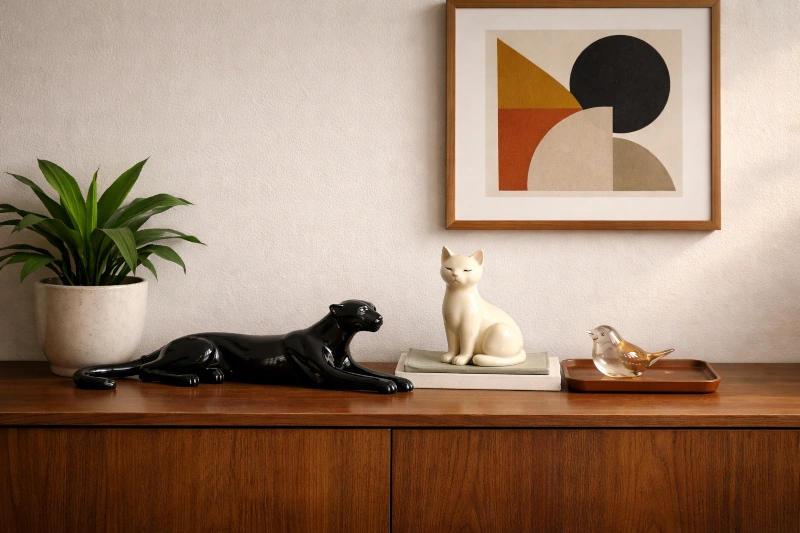
Sleek black panthers are perhaps the poster child for mid-century kitsch. Often made to sit along the top of a television or sideboard, they’re long, low and dramatic. When styled simply, a single panther can look surprisingly sophisticated.
Cats are everywhere, from cute wide-eyed kittens to tall, stylised forms with long necks and arched backs. Some feel playful and cartoonish, others verge on modern sculpture. A row of similar-coloured cats can be a very effective display.
Swans, deer and birds also appear frequently. Swans are often seen in pairs or trios, sometimes with built-in planters or bowls; deer tend to be delicate and graceful, all legs and ears; birds can be realistic or highly abstract, especially in glass.
You don’t have to collect every animal under the sun. Choosing a small “cast” – say, mostly cats with the occasional panther or bird – helps your shelves feel intentional rather than random.
Where and How to Buy Vintage Figurines
Part of the fun is the hunt, and once you know where to look, you’ll notice animals popping up everywhere.
Local thrift stores and charity shops are good spots for affordable finds, especially for common ceramics and glass animals. Stock turns over quickly, so regular visits pay off. Antique centres and vintage shops usually have a more curated selection and often higher prices, but you’re more likely to find special pieces there – and you can pick them up, turn them over and inspect them closely.
Flea markets, car boot sales and estate sales can be brilliant if you’re patient. You might be digging through boxes or scanning crowded tables, but that’s often where the best stories come from: the panther that lived on someone’s TV for forty years, or the glass bird that was a wedding gift.
Online marketplaces and auctions open up a much wider world but come with their own challenges. Clear, well-lit photos are essential. Always check pictures from multiple angles, including close-ups of faces and bases. Look for honest descriptions of chips, cracks or repairs. If you can’t see the base, ask for an extra photo before committing.
Wherever you’re buying, give yourself a quick mental checklist: Does the piece fit the general style or “rules” of your collection? Is the condition good enough that you’ll be happy to see it every day? Does the price feel fair compared to what you’re seeing elsewhere? Saying no is just as important as saying yes.
Styling Your Animal Collection So It Looks Intentional
The fastest way to make figurines look messy is to scatter them across every surface. The fastest way to make them look stylish is to group them.
Think in terms of small “animal gangs” rather than singles everywhere. A set of three cats in slightly different heights on a sideboard feels deliberate. A panther anchored at one end of a shelf, with books and a plant keeping it company, looks like part of a plan.
Varying height adds interest. You can stand one figurine directly on the surface, place another on a small stack of books and tuck a third on a low riser or tray. This keeps the group from feeling flat and lets each piece be seen.
Mix materials and textures so the animals feel integrated into the room. A glossy black panther against warm wood, beside a simple glass vase and a framed print, reads as mid-century chic. A little glass bird perched next to a plant pot and a candle feels like part of a still life, not a random add-on.
Most importantly, give your eye some breathing room. Not every shelf needs animals. Let some spaces stay simple so your figurine groupings can really shine.
Kitsch With a Light Touch: Knowing When to Stop
If you love vintage kitsch, it’s easy to keep saying “just one more” until every surface has a face. Editing is your friend.
One simple approach is to pick a maximum number of figurines per room, or per shelf, and stick to it. You can also rotate pieces through storage: keep a few favourites on display and swap in others seasonally or whenever you feel like a change. That way your collection gets enjoyed over time and the room doesn’t feel overcrowded.
Pay attention to how the room feels when you walk in. If your eye doesn’t know where to land, or everything competes for attention, it might be time to pull a couple of pieces back and let your strongest animals carry the story.
Remember: a single panther or a small group of cats can make more impact than a crowd of twenty figurines all jammed together.
Care and Display Tips
Animal figurines tend to have vulnerable spots: ears, noses, tails and outstretched paws. A bit of care in how you handle and place them will save you heartbreak later.
Dust regularly with a soft cloth or gentle brush, especially around small details where dust likes to settle. For ceramics and glass, a lightly damp cloth will usually handle smudges; just dry them carefully afterwards. Avoid harsh cleaners and abrasive pads that could scratch glaze, glass or paint.
Display them away from high-traffic edges where they might be knocked, and think about pets and small children if you share your home with either. Deep shelves, sturdy mantels and solid sideboards are better than narrow ledges.
If the base is rough, consider adding small felt pads or a thin protective mat underneath so you don’t scratch the furniture they’re sitting on. That also makes it easier to slide them gently into position without dragging.
Final Thoughts: Collect With a Wink
Vintage animal figurines are not serious objects – and that’s exactly why they’re so enjoyable. A cat with an arched back, a panther mid-prowl, a glass bird frozen mid-flight: they bring a bit of humour and drama into everyday spaces.
You don’t need a huge budget or a perfect collection. Start by choosing pieces that genuinely make you smile and that work with the colours and materials you already have at home. Look for decent quality and good condition, be selective about what you bring in, and style your animals in small, thoughtful groupings.
Most of all, let there be a little wink in it. Kitsch with intention is fun, personal and memorable – and your cats, panthers and other creatures will feel like part of your story, not just more stuff on a shelf.
Leave a Reply