
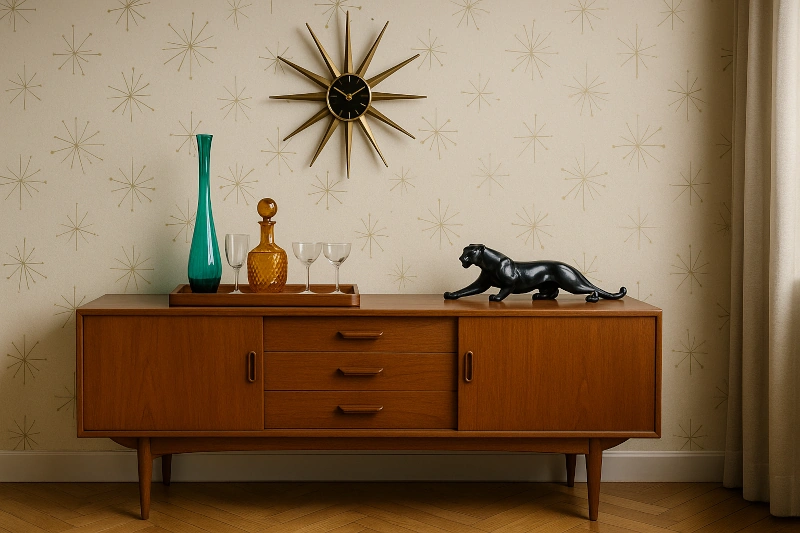
Mid-century glassware looks as fresh today as it did on 1950s–70s sideboards. Clean lines, lush colour and sculptural forms make it perfect for everyday use and display. If you’re just getting started, this guide will help you recognise quality, understand the shapes and textures you’ll see most often, and care for your pieces, so you can collect with confidence and style your home beautifully.
Pressed vs blown: how to tell at a glance
Most beginners want a quick way to separate pressed (moulded) glass from blown glass. Pressed glass is made in a mould, so patterns repeat crisply and you may spot faint seams along the body or handle. It often has a perfectly flat, glossy base. Blown glass is shaped by hand; look for a pontil mark or a ground, slightly domed base where the rod was detached. Lines feel more fluid and shapes can be just a touch asymmetric, in a good way. Some pieces are mould blown and then finished by hand, so use the overall impression: are the lines too perfect to be hand formed, or does the base and silhouette suggest a craftsperson’s touch?
Shapes and textures you’ll recognise
A few forms appear again and again because they simply work. Swung vases stretch upward with rippled rims and bring instant drama to a console or mantle. Decanters pair sleek bodies with geometric stoppers; a good fit between stopper and neck is a reassuring sign. Textures are part of the fun: optic ribs catch the light like water, while bark patterns add mid-century swagger. Crackle finishes and controlled bubble glass give sparkle on a bar cart or sunlit shelf, and classic cocktail sets, tumblers, coupes, hi-balls with a matching jug, bring coordination without feeling stuffy. Once you start noticing these details, you’ll see them everywhere.
Colour stories that sing in MCM spaces
Mid-century palettes love smoke grey, amber, olive, teal, amethyst and jewel-tone blues, with milky pastels for softness. Clear glass is your best friend when you’re learning to style; it calms busy shelves and lets one or two colours take the spotlight. Try a tall amber vase with two clear companions for balance, or a teal decanter flanked by clear lowballs on a teak tray. If you enjoy a little drama, a single piece of uranium (sometimes called “vaseline”) glass under a UV lamp is a great conversation starter, treat it as a display collectable and keep it out of reach of children.
Tips for your next purchase
Before you fall in love with a piece, run a fingertip lightly around the rim and lip. Tiny “flea bites” catch the light and the skin; a small nick isn’t a deal-breaker, but you should know it’s there. Peer through the body at an angle to check for cloudiness in vases, jugs and decanters; stubborn mineral staining can be permanent. Set the piece on a truly flat surface and see if it sits square, excess wobble may mean a ground down base or rim.
For sets, confirm the count and consistency. Six tumblers that look like five plus a cousin won’t feel satisfying on the shelf. Decanters should have a stopper that fits cleanly and looks right for the form; mismatched stoppers are common. Expect light scuffing on vintage bases, honest shelf wear is reassuring, while a too-perfect base on an “old” item can be a red flag. Keep maker labels when you find them, photograph etched signatures or backstamps, and read listing notes carefully; terms like “nibbles” or “wear consistent with age” are part of the language of vintage and usually point to small, honest imperfections.
Care and cleaning to keep the sparkle
Dishwashers are efficient, but they’re not kind to vintage glass. Hand-wash with mild soap in warm, not hot, water, and avoid sudden temperature changes that can shock the glass. Use a soft bottle brush for tall vases and decanters and steer clear of gritty abrasives. A soak with warm water and a splash of white vinegar can lift light mineral film; rinse thoroughly and let pieces air dry on a soft towel. Prolonged, strong sun may fade certain colours, so aim for bright indirect light if a piece will live on a sunny sill. Felt pads under heavier items protect timber and keep shelves scratch free. For uranium glass, enjoy the glow but treat it as decorative only.
Style it like a pro
Great displays are about rhythm, not rules. Start with a loose “triangle”: one tall statement, one medium anchor and one small accent. Odd numbers feel lively, but don’t crowd the surface, leave pockets of negative space so shapes can breathe. If colour feels tricky, pick a single hue and explore texture instead: a ribbed vase, a smooth cylinder and a crackle dish in the same tone look curated, not matchy. Teak and glass are a classic mid-century pairing; the warmth of wood makes cool glass feel welcoming, and a starburst clock or panther figurine nearby anchors the look.
Bar carts come together quickly with a simple formula: six matching tumblers, one striking jug or decanter, a tray and a small bowl for citrus or garnishes. In an entryway, place a tall swung vase on a sideboard and echo its colour with a small trinket dish at the opposite end; a framed print above ties the vignette into the room. Kitchen open shelves love small glass sets, stack two or three and interleave with ceramics for a relaxed, collected feel. Seasonal styling can be subtle: amber glass warms autumn tablescapes, while teal and clear feel crisp in summer. Rotate pieces to keep displays fresh and to spread the love across your collection.
Ready to explore the real thing? We’re a Top Rated Australian eBay seller and new items are added daily, from swung vases and decanters to textured glass sets. Browse the Pottery, Ceramics & Glass category to see what’s live now, and don’t miss Home Décor & Lighting and Kitchen & Dining for pieces that complete the look.
Leave a Reply