
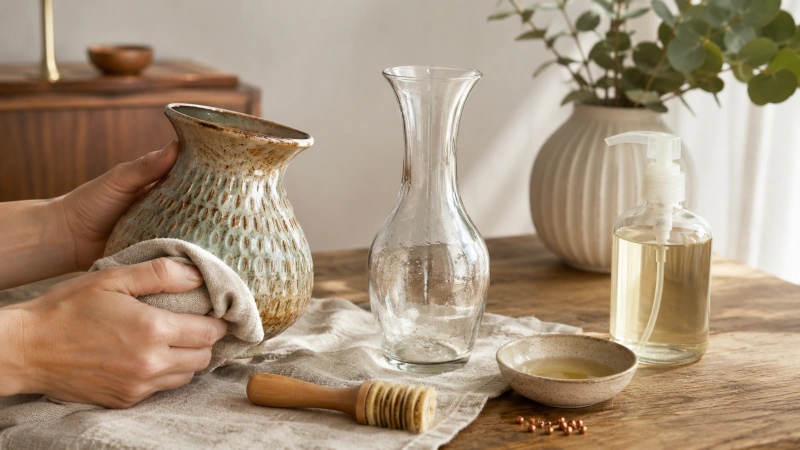
TL;DR
- Start gently. Warm water, mild dish soap and a soft cloth will handle most everyday dirt on vintage pottery and glass.
- Avoid dishwashers, abrasive cleaners, sudden temperature changes and prolonged soaking, especially with cracked, crazed, painted or unglazed pieces.
- Before cleaning anything aggressively, work out what you are dealing with. A little age and patina can be preferable to damaging a vintage finish in the pursuit of perfection.
Finding a beautiful piece of vintage pottery or glass is one thing. Getting it home and deciding how to clean it can be another.
Maybe it has spent years on a dusty shelf. Perhaps there is an old price sticker underneath, cloudy residue inside a vase, or decades of grime sitting in the texture of a pottery glaze. The temptation can be to give everything a serious scrub and make it look brand new.
With vintage pieces, gentler is usually better.
Older glass, ceramics, glazes, decals and painted decoration can react very differently from modern kitchenware. What looks like dirt may sometimes be age-related wear, mineral deposits or part of the original finish. A little patience can make the difference between bringing a piece back to life and accidentally removing something that cannot be replaced.
Start by Looking Before You Clean
Before putting anything near water, take a good look at the piece.
Check pottery for cracks, crazing, chips and unglazed areas. Look around handles, rims and bases where damage can be easy to miss. With glass, check for fine cracks, chips around the rim and any previous repairs.
This matters because water can work its way into damaged or porous areas. A perfectly sound glazed vase may tolerate a gentle wash without any trouble, while a crazed ceramic piece or one with an unglazed base may absorb moisture if left soaking.
Also look at the decoration. Is the pattern under the glaze, or does it appear to sit on top? Are there painted details, gold trim or decals? Surface decoration deserves particularly gentle treatment because repeated rubbing can gradually remove it.
If you are unsure, assume the finish is delicate and start with the mildest possible method.
The Basic Clean: Simple Is Usually Best
For many vintage pottery and glass pieces, you do not need anything complicated.
Use lukewarm water with a small amount of mild dishwashing liquid and a soft cloth or sponge. Avoid water that is extremely hot or cold. Vintage glass and ceramics do not appreciate sudden temperature changes, particularly if they already have tiny flaws you cannot see.
Wash gently rather than scrubbing. Pay attention to rims, handles and textured areas where dust tends to settle. A soft toothbrush can be useful for stubborn dirt in detailed pottery or textured glazes, but use very light pressure.
Once clean, rinse carefully and dry with a soft cloth. For hollow pieces such as vases and decanters, let the interior dry completely before putting them back on display.
It sounds almost too simple, but mild soap and patience will handle a surprising amount of vintage grime.
Cleaning Textured Pottery
Pieces such as Fat Lava pottery can be particularly good at collecting dust.
All those craters, ridges and rough glazes that make the pottery interesting also create hundreds of tiny places for dirt to hide. A normal cloth may simply skim across the top.
For routine care, a soft artist’s brush, makeup brush or very soft toothbrush works well. Brush gently across the surface rather than forcing the bristles deep into every hole.
If the piece needs a proper clean, use a small amount of mild soapy water and work carefully through the textured areas. Avoid hard scrubbing because raised glazes can sometimes chip at their highest points.
Textured pottery does not necessarily need to look factory-new. Slight variations in colour and surface are often part of what gives an older piece its character.
What About Crazing?
Crazing is the network of fine lines that can develop in a ceramic glaze over time. Sometimes it is barely visible; on other pieces it becomes a noticeable part of the surface.
Crazing does not automatically mean a piece is ruined, but it does mean you should be cautious with water.
Those fine cracks can allow moisture and staining to reach the ceramic body underneath the glaze. For that reason, heavily crazed pottery is better wiped than soaked. Use a damp cloth, clean small areas at a time and dry the piece promptly.
Trying to bleach stains out of crazing can create more problems than it solves. Strong chemicals can penetrate the same cracks and may be difficult to remove completely.
For display pieces, it is often better to accept some signs of age rather than chase a spotless finish.
Cleaning Vintage Glass
Vintage glass is generally straightforward to clean when it is in good condition.
Lukewarm water, mild detergent and a soft cloth are a safe starting point. Wash pieces individually rather than putting several glasses or vases together in a sink where they can knock against one another.
Be particularly careful with thin rims, stems and applied handles. These are often the weakest points.
For narrow vases and bottles, a bottle brush can help, provided it is soft enough not to scratch the interior. Another useful trick is to add a little warm soapy water and gently swirl it around rather than trying to reach every surface by hand.
Avoid using metal implements to scrape dirt from inside glass. One slip can leave a permanent scratch or chip.
Cloudy Glass and Mineral Deposits
One of the more frustrating problems with vintage glass is cloudiness.
Sometimes the cause is simply mineral residue left behind by water. In those cases, a gentle clean may make a noticeable difference. A little diluted white vinegar can sometimes help with mineral deposits, but start cautiously and avoid using it on pieces with painted decoration, metallic trim or finishes you are unsure about.
Unfortunately, not all cloudy glass can be restored.
Some haze is caused by permanent surface deterioration or etching. If the glass remains cloudy after sensible cleaning, more aggressive treatment may do little besides increase the risk of damage.
That is worth remembering when buying too. A cloudy vase may improve, but it is better to assume some haze could be permanent and decide whether you still like the piece as it is.
Stickers, Labels and Old Price Marks
Original labels can add interest and sometimes value to vintage pieces, so do not automatically remove every sticker you see.
If a label looks original to the maker, it may be worth leaving alone. Clean around it rather than soaking it.
Old shop price stickers are another matter. We have found eucalyptus oil particularly useful for removing old stickers and the sticky residue they leave behind. Peel away as much of the paper label as you can, then use a small amount of eucalyptus oil on a soft cloth or cotton pad and gently work at the remaining adhesive. Once the residue has lifted, wash the area with a little mild soapy water to remove any remaining oil.
As with any cleaner, think about the surface first. Eucalyptus oil is best suited to a sound, non-porous surface such as plain glass or fully glazed ceramic. Be much more cautious around painted decoration, decals, gold trim, porous pottery or an original maker’s label, and test an inconspicuous area first if you are unsure.
And resist the temptation to scrape stubborn residue with anything sharp. A little patience is preferable to replacing a sticky mark with a permanent scratch.
Painted Details, Decals and Gold Trim
Decoration applied over the surface deserves special care.
Gold rims, hand-painted accents and transfers can wear away gradually over decades. Strong detergents, abrasive sponges and repeated rubbing will speed that process up.
For these pieces, use a soft damp cloth and very little pressure. Do not scrub the decorated areas just because they look slightly dull.
It is also worth remembering that a little fading may simply be part of the piece’s history. Restoring every surface to perfect brightness is not always possible — or desirable.
What About the Dishwasher?
For valuable or favourite vintage pieces, the simplest answer is: skip it.
Dishwashers combine high temperatures, strong detergents, water pressure and movement. Even if a piece survives one cycle perfectly well, repeated washing can gradually affect surface decoration and older finishes.
Handwashing takes a little longer, but it gives you complete control over temperature, pressure and handling.
The same applies to vintage pottery that looks thick and sturdy. Heavy does not necessarily mean dishwasher-safe, particularly when the glaze or decoration is decades old.
Stains Inside Vases and Decanters
Interior staining can be one of the trickier problems, particularly with tall or unusually shaped vases where no brush will fit through the opening.
Start with lukewarm water and a little mild detergent. A soft bottle brush can help where the neck is wide enough, and mineral deposits on plain glass may also respond to a mild vinegar solution followed by a thorough rinse.
For narrow-necked glassware, small cleaning beads can be surprisingly effective. We recently bought tiny copper cleaning beads, around 2–3 mm across, specifically to clean a vase with an opening too narrow for a brush. Add the beads with a small amount of water and gently swirl the vase so the beads travel across the inside surface and loosen mineralised deposits.
The important word is gently. You are trying to roll the beads around the surface rather than shake them violently against the glass. Once finished, pour them into a fine strainer, rinse the vase thoroughly, then wash and dry the beads before storing them for next time.
Cleaning beads are particularly handy for decanters, bottles and oddly shaped vases because they can reach areas that fingers and brushes simply cannot.
As always with vintage glass, inspect the piece first. If it has cracks, significant chips or particularly delicate decoration, it is better to take a more cautious approach.
And know when to stop. If a stubborn mark inside a vase is barely visible once the piece is displayed or filled with flowers, removing every last trace may not be worth risking the glass.
Know When to Stop
This may be the most useful cleaning advice of all.
Vintage objects are allowed to look vintage.
A little wear around a base, light crazing, minor staining or a slightly softened finish can all be part of a piece that has survived fifty or sixty years. Cleaning should make an object pleasant to handle and display, not erase every sign that it has had a life before you found it.
If you find yourself reaching for harsher chemicals, stronger abrasives or increasingly complicated home remedies, it may be time to stop.
Sometimes the safest treatment is simply to enjoy the piece as it is.
Everyday Care After Cleaning
Once your pottery and glass are clean, keeping them that way is much easier.
Regular dusting prevents grime from building up, especially on textured ceramics. A soft cloth works for smooth surfaces, while a gentle brush is useful for Fat Lava and other deeply textured glazes.
Keep delicate pieces away from the edges of shelves and from places where they are likely to be knocked. If a pottery base is rough, felt pads can protect both the object and the furniture underneath.
Try not to lift pieces by handles, rims or decorative projections. Support the main body, particularly with larger pottery and glass.
A few simple habits can prevent most of the damage that happens after a vintage piece comes home.
Final Thoughts: Clean Gently, Keep the Character
Cleaning vintage pottery and glass is less about finding a miracle product and more about knowing when to be cautious.
Start with mild soap, lukewarm water and a soft touch. Pay attention to cracks, crazing, labels and surface decoration before you begin. Treat textured glazes gently, avoid dramatic temperature changes and accept that some cloudiness, wear and staining may simply be part of the object’s age.
Most importantly, do not feel that every vintage piece has to look new.
The tiny signs of use are often part of what makes an older object interesting in the first place. Clean it enough to enjoy it, care for it well, and leave a little history behind.
Leave a Reply