
TL;DR
- A decanter does not need a perfect original stopper to be worth buying, but the fit should still be sensible and stable.
- Small mismatches can be fine for display, while cracks, major chips and a loose or badly grinding stopper matter much more.
- Focus on what you want the piece for: styling, collecting or actual use. That will tell you what flaws you can live with.
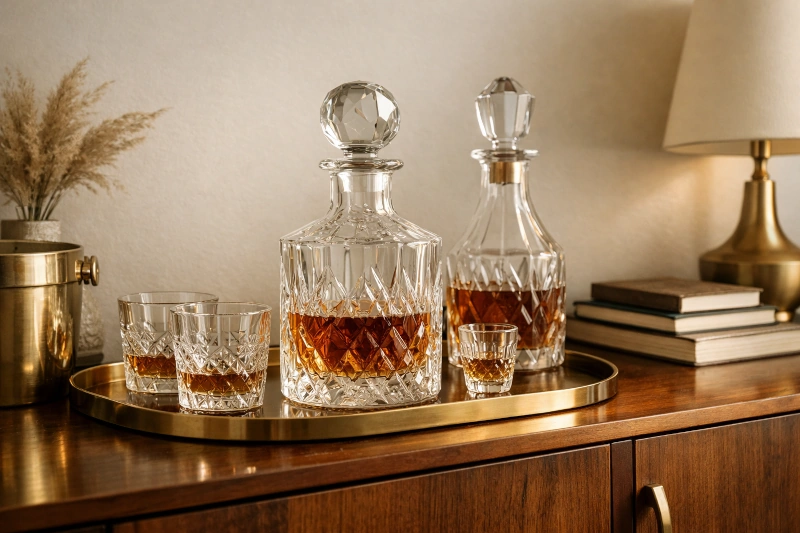
There is something instantly satisfying about a vintage decanter. It might be the shape, the sparkle, the weight in the hand, or that little extra moment of lifting the stopper before pouring. Decanters feel practical and theatrical at the same time, which is why they still earn a place on bar carts, sideboards and shelves.
But the stopper is often where the questions begin. Is it original? Does it fit properly? Does a mismatch ruin the piece? Is a chipped stopper acceptable? Can you replace one, or is that missing stopper a deal-breaker?
The good news is that vintage decanters do not have to be perfect to be enjoyable. This guide walks through what really matters, what does not, and how to think about fit, form and common fixes before you buy.
Why the Stopper Matters So Much
With vintage decanters, the body usually gets all the attention first. Collectors notice the cut glass, the clean lines, the heavy base or the sculptural silhouette. But the stopper is what completes the look. A decanter without one can feel unfinished, even when the body itself is beautiful.
The stopper also affects function. A good one should sit securely, look balanced and feel right for the neck of the decanter. If you plan to use the piece, the stopper matters even more because it helps reduce dust and limits exposure to air. If the fit is poor, the decanter may still look attractive on a shelf, but it may not be as practical for regular use.
That is why stopper questions come up so often. The stopper is both decoration and working part, and it is usually the first thing to get chipped, swapped or lost over the years.
Original Stopper or Replacement: Does It Matter?
In an ideal world, every decanter would still have its original stopper. The proportions would be exactly right, the lines would flow naturally, and the whole piece would feel complete. For some collectors, especially those interested in particular makers or matching sets, that originality matters a great deal.
But in everyday vintage buying, things are rarely that neat. Stoppers get broken. Families mix glassware over decades. Pieces are separated and re-paired. It is very common to find a decanter with a stopper that seems close, but not quite born with it.
That does not automatically make it a bad buy.
If the stopper looks visually right, sits well and does not distract from the shape, many buyers will be perfectly happy with it. For display purposes, a good replacement can be absolutely fine. If the decanter has strong form and presence, a near-match may matter far less than people fear.
Where mismatch becomes a real issue is when the proportions are obviously off. A stopper that is too small can make the neck look oddly exposed. One that is too large or too tall can throw off the balance of the whole piece. If your eye keeps going straight to the awkward stopper, that is usually your answer.
What Good Fit Actually Looks Like
A good stopper fit is not just about whether it goes in the neck. It should feel natural and stable.
When you place the stopper in, it should sit without wobbling or leaning. It should not look like it is perching nervously on top or sinking too deeply into the neck. Visually, it should feel like part of the overall silhouette rather than an afterthought.
With ground glass stoppers, some variation is normal. They are often shaped to sit snugly rather than dropping in with perfect smoothness. A stopper may turn slightly as it settles or sit at a certain point rather than all the way down. That can be completely normal. What you want to avoid is a fit that feels strained, gritty in a worrying way, or unstable.
If the stopper jams hard, do not force it. If it rattles around or slips too easily, that matters too. A stopper that feels loose enough to lift out with the slightest nudge is probably not a good functional fit, even if it looks acceptable from a distance.
What Matters Most When You’re Buying
The first question is simple: what do you want the decanter for?
If you are buying mainly for display, you have more flexibility. A replacement stopper, a tiny nick on the base, or some light wear may not matter much at all if the shape is beautiful and the piece looks great in your space.
If you want to use it, the standards need to be a little higher. You will care more about the stopper fit, the condition of the neck and rim, and whether the decanter feels comfortable and dependable in the hand.
A few things deserve special attention.
Cracks are always important. A crack around the neck, rim or body is more serious than a small flea-bite chip on the underside of a stopper. Cracks affect both appearance and strength, and they are difficult to ignore once spotted.
Chips around the neck and stopper are also worth checking closely. A tiny nick may be tolerable on an old display piece, but larger chips can affect the fit and feel unpleasant when handled. They can also make the piece look visibly compromised.
Cloudiness matters, though it depends on the cause. Some decanters simply need a good clean. Others have internal haze or etching that will not easily improve. A little softness in an older piece can be acceptable, but heavy dullness can rob a decanter of the sparkle that made it appealing in the first place.
Finally, pay attention to the overall look. Vintage decanters are often about silhouette as much as detail. If the form is elegant and the stopper completes it well, that counts for a lot.
Common Problems That Matter Less Than You Think
This is where buyers often relax a bit.
A stopper that is not confirmed original is not the end of the world. Unless you are paying a premium for a specific maker or model, what matters more is whether it looks right and works well enough for your needs.
Small signs of age can also be part of the charm. Light wear on the base, minor surface scratches from decades of careful use, or a tiny pinprick nick in an unobtrusive area may not affect enjoyment at all. Vintage glass that has actually been lived with will rarely be flawless.
Even slight variation in fit is not always a problem. Some stoppers do not sit in a perfectly satisfying click. Some sit a little higher than you might expect. If the overall look is good and the fit is stable, it may simply be part of the character of the piece.
The trick is not to expect museum perfection from every vintage decanter. A handsome, usable piece with a sensible stopper is often a better buy than a “perfect” one that feels bland.
Forms That Tend to Work Best
Some decanter shapes are more forgiving than others when it comes to stopper issues.
Simple geometric forms, such as square-sided decanters or clean cylinders, often cope well with a slightly different stopper as long as the proportions are right. The overall shape remains strong, and your eye reads the piece as a complete object.
More sculptural or highly decorative decanters can be fussier. If the neck, shoulders and stopper were clearly designed as one flowing composition, a replacement may stand out more. On these pieces, even a close substitute can sometimes feel slightly wrong.
This does not mean you should avoid elaborate shapes. It just means you should trust your eye a little more. If the decanter has a dramatic body and the stopper interrupts that drama instead of finishing it, you will probably notice every time you walk past it.
Fixes, Workarounds and What to Avoid
A careful clean is the first and best fix for many vintage decanters. Dust, residue and old smells can make a piece seem worse than it is. Often, a proper wash and dry will bring back a lot of clarity.
If a stopper is sticking, patience matters. Never twist aggressively or force it. Vintage glass can chip or crack more easily than people expect when pressure is applied at the neck.
If a decanter has lost its stopper, you may be able to find a sympathetic replacement, especially for display. The key word is sympathetic. It should suit the scale, shape and style of the decanter rather than just filling the hole.
What you want to avoid is trying to “improve” the piece with obvious makeshift solutions. A stopper that is padded, wedged, or altered in a clumsy way usually creates more problems than it solves. The same goes for amateur glue repairs on visible chips or cracked necks. These rarely disappear, and they often make future handling riskier.
Sometimes the best answer is simply to accept the piece for what it is: a lovely display object rather than a perfect working decanter.
Display, Use and a Bit of Common Sense
If you are using a vintage decanter for serving, keep it clean and handle the stopper gently. If you are mostly styling it, think about how it sits with trays, glassware and bottles around it. One good decanter can do a lot of visual work on a bar cart or shelf.
A decanter with a beautiful shape but imperfect stopper may still be wonderful in a display setting. A fully matched one with a crisp fit may deserve pride of place if you are a collector. There is room for both approaches.
It is also worth being honest with yourself. Some buyers enjoy the hunt for original matches and perfect proportions. Others simply want a glamorous bottle-shaped object that catches the light and makes a room feel more interesting. Neither approach is wrong.
Final Thoughts: Buy the Whole Piece, Not Just the Problem
Vintage decanters can send buyers into overthinking mode, especially when stopper questions are involved. But most of the time, the answer is simpler than it first appears.
Look at the whole piece. Does it have good shape? Does the stopper look right? Is the fit stable enough for how you plan to use it? Are the flaws minor enough that they fade once the decanter is on display?
If the answer is yes, you may already have your answer.
A perfect original stopper is lovely, but it is not the only thing that makes a decanter worth bringing home. In many cases, form, balance and overall presence matter more than a technical flaw that nobody else would ever notice. Buy with your eyes open, trust your judgement, and let the piece earn its place as a whole.
Leave a Reply