
TL;DR
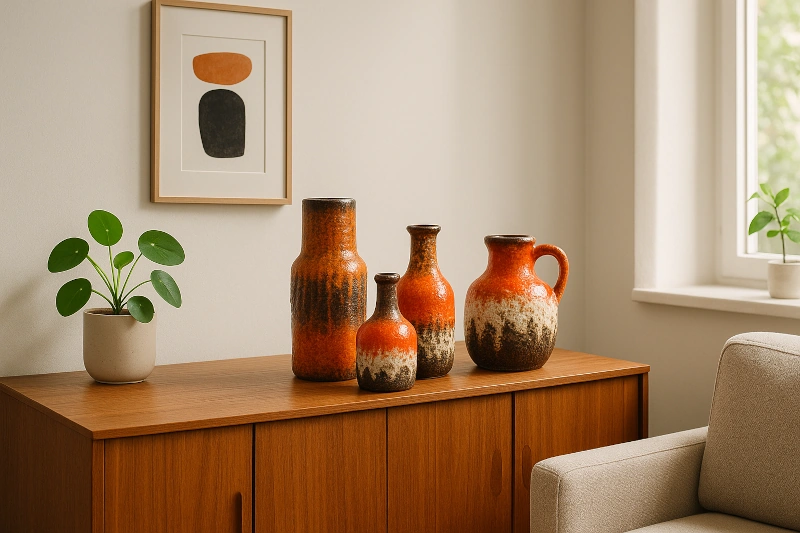
- “Fat Lava” pottery is chunky, mid-century ceramic with thick, textural, lava-like glazes.
- Look for cratered, drippy glazes, bold colour contrasts and strong, sculptural shapes.
- Focus on condition, presence and how much you love the piece – the rest you can learn as you go.
If you love bold mid-century ceramics, chances are you’ve already scrolled past a piece of “Fat Lava” pottery and paused. Chunky, cratered glazes, drips that look like cooling volcanic rock, and colours that glow against timber and glass – it’s hard to ignore.
This guide walks you through what Fat Lava pottery actually is, how to recognise it, what shapes and textures to look for, and some simple tips for buying, styling and caring for it at home.
What Is “Fat Lava” Pottery?
“Fat Lava” isn’t a brand name, and it wasn’t a term used by the original potteries. It’s a collector’s nickname that stuck.
Most people use “Fat Lava” to describe mid-century and later ceramics with thick, dramatic glazes that look a bit like cooled lava or rock. These glazes often sit heavily on the surface, puffed up and full of movement, rather than lying flat and polite.
A huge amount of this style came out of West Germany from the 1950s through to the 1970s, from makers such as Scheurich, Bay, Carstens, Dümler & Breiden and many others. Lava-style glazes also appear on ceramics from other parts of Europe and, later on, from potteries around the world that were inspired by the look.
Today, many collectors use “Fat Lava” as a handy shorthand for chunky, textural mid-century pottery with lava-style glazes, whether it’s strictly West German or not.
Why “Fat” and Why “Lava”?
The “fat” part refers to how the glaze behaves. On many pieces it sits thick and padded, sometimes looking like cake icing or expanding foam. The surface can feel raised under your fingertips.
The “lava” part is about texture and movement. True lava glazes often have pitted or foamy surfaces, crater-like holes, bubbles, and drips that seem to have flowed while the glaze was molten and then frozen in motion.
Put those two ideas together and you get ceramics that feel energetic and tactile, even when they’re just sitting quietly on a shelf.
Textures & Glazes: What to Look For
When you’re deciding if a piece belongs in the Fat Lava family, the glaze is your best starting point.
You’ll often see cratered surfaces that look like pumice stone, foamy or bubbly areas where the glaze has “risen” and set into small ridges and lumps, and dramatic drip effects where one colour has flowed down over another. Some pieces pair a rough, gritty lava band with a smooth, glossy or matte background, giving a clear contrast between the two.
Colours range from earthy browns, creams and ochres through to blazing oranges, reds, yellows and deep cobalt blues. Strong contrasts are common – for example, black or dark brown lava over a bright orange base, or white lava over chocolate brown.
If you can, gently run your fingers over the surface. Many Fat Lava pieces are as interesting to touch as they are to look at, with little craters, ridges and bubbles that catch the light differently from every angle.
Shapes & Forms Collectors Love
Glaze might be the star, but the shapes are doing just as much of the work.
You’ll see tall cylinder vases that act as canvas for wide bands of glaze, bottle and gourd shapes with narrow necks and rounded bodies, and jug or ewer forms with exaggerated handles and spouts. Lamp bases with Fat Lava glazes are another favourite, bringing height and colour to a sideboard or bedside table. Wall plaques and reliefs also appear, with abstract patterns, stylised figures or animals picked out in lava textures.
Some forms are very simple – straight-sided cylinders or understated bottles – and rely on the glaze to do the talking. Others are heavily sculpted, with grooves, ridges or cut-outs. Both approaches can work beautifully, especially when mixed with timber, glass and other mid-century décor.
When you’re thinking about buying a piece, step back and squint a little. If the shape still feels strong and interesting from across the room, that’s usually a good sign.
Marks, Backstamps & “Mystery” Pieces
Turning a piece over can give you useful clues, but it’s not always the full story.
On the base, you might find a moulded number that refers to the form or size, a country of origin mark such as “W. Germany” or “West Germany”, or a maker’s name or logo. Many pieces, however, only kept a paper label when they left the factory, and those labels rarely survive decades of use and dusting. It’s very common to find lava-style pottery with only a number and a country name on the bottom, or no marks at all.
Unmarked pieces aren’t automatically less interesting or less beautiful. They can still have superb glazes and make wonderful display pieces. But if you’re chasing particular makers or trying to build a reference collection, marks and numbers become more important and you may find yourself doing a lot of comparing with books, online guides and fellow collectors’ photos.
Buying Fat Lava: Simple Things to Check
Fat Lava pottery is still reasonably accessible in many places. You’ll find it in thrift stores and charity shops, vintage markets, antique centres, estate sales and online marketplaces.
Before you commit, it’s worth taking a moment to check a few basics.
Condition
Look for cracks, large chips and obvious repairs. Hairline cracks that run through the body and big chunks missing around the rim or base will usually affect both value and your enjoyment of the piece. Light wear on the base and tiny glaze nicks are more acceptable on older pottery, but you may still want to factor them into the price you’re comfortable paying.
Glaze health
Lava glazes naturally have pits, bubbles and small imperfections – that’s part of their charm. What you want to watch out for is long structural cracks, large areas where the glaze has flaked away, or staining that suggests water has crept into the clay body through damage.
Shape and presence
Ask yourself whether the piece has “presence”. Does the shape feel balanced? Does the glaze suit the form? Would you notice it from across the room on a shelf or sideboard? Fat Lava pottery earns its keep by being bold and full of character.
Price and value
Prices can vary dramatically depending on maker, rarity, size and who is selling the piece. It helps to browse widely, compare similar items, and slowly build up a feel for what’s reasonable. There will always be some pieces that command a premium, but it’s better to pay a fair price for something you genuinely love than chase a name for its own sake.
Styling Fat Lava at Home
Fat Lava pottery can be surprisingly flexible in a room. One strong vase can act as a focal point, or a small group can anchor a larger display.
You might give a single tall vase its own space on a sideboard or console table, with a neutral wall behind it so the texture and colour can stand out. A cluster of pieces in similar tones – for example, all browns and creams, or all fiery oranges and reds – can create a cohesive grouping even if the shapes are quite different. Vary the heights, and let one piece be the “leader” while the others support it.
These pieces also pair well with other mid-century favourites. Rough lava glazes look great next to smooth glass, polished wood and simple metal accents such as brass or chrome. You can tuck a lava vase into a shelf alongside books and framed prints, or use a lava lamp base to bring both light and texture into a darker corner.
Many vases can still be used functionally with flowers or dried stems. Just be a little cautious with very rough exteriors near delicate surfaces, and avoid dragging the base across fine timber or lacquer.
Caring for Fat Lava Pottery
For all their drama, most Fat Lava pieces are sturdy and forgiving if you treat them with a bit of care.
A soft, dry cloth or a clean, soft brush works well for regular dusting, especially when you need to get into little craters and ridges. If a piece needs more than a dust, a lightly damp cloth and a mild soapy solution are usually enough. Avoid harsh cleaners, abrasive pads and anything that might scratch the glaze or the base.
It’s best not to soak vintage ceramics in water for long periods, particularly if you can see any cracks, crazing or unglazed areas that might absorb moisture. If you do rinse out a vase, give it time to dry thoroughly. Keep Fat Lava pieces away from sudden extremes of heat and cold, and don’t be tempted to put them in the dishwasher.
If the base feels rough, adding felt pads or a small coaster underneath can protect shelves and tabletops from scratches while still letting you enjoy the piece every day.
Final Thoughts: Follow the Texture
Fat Lava pottery sits at a lovely intersection of art and everyday object. It’s bold, slightly eccentric and incredibly satisfying to live with. The more you look at it, the more you start to notice the tiny bubbles, the way the glaze flows, and the way light catches each crater and ridge.
If you’re just starting out, you don’t need to memorise every maker or chase the rarest names. Instead, focus on:
- Textures and glazes that really grab you
- Strong, appealing shapes
- Pieces that feel good in your home
Over time, your eye will sharpen. You’ll begin to spot good lava glazes from across a shop floor or in a crowded online listing. And each piece you bring home will add another layer of colour and texture to your space.